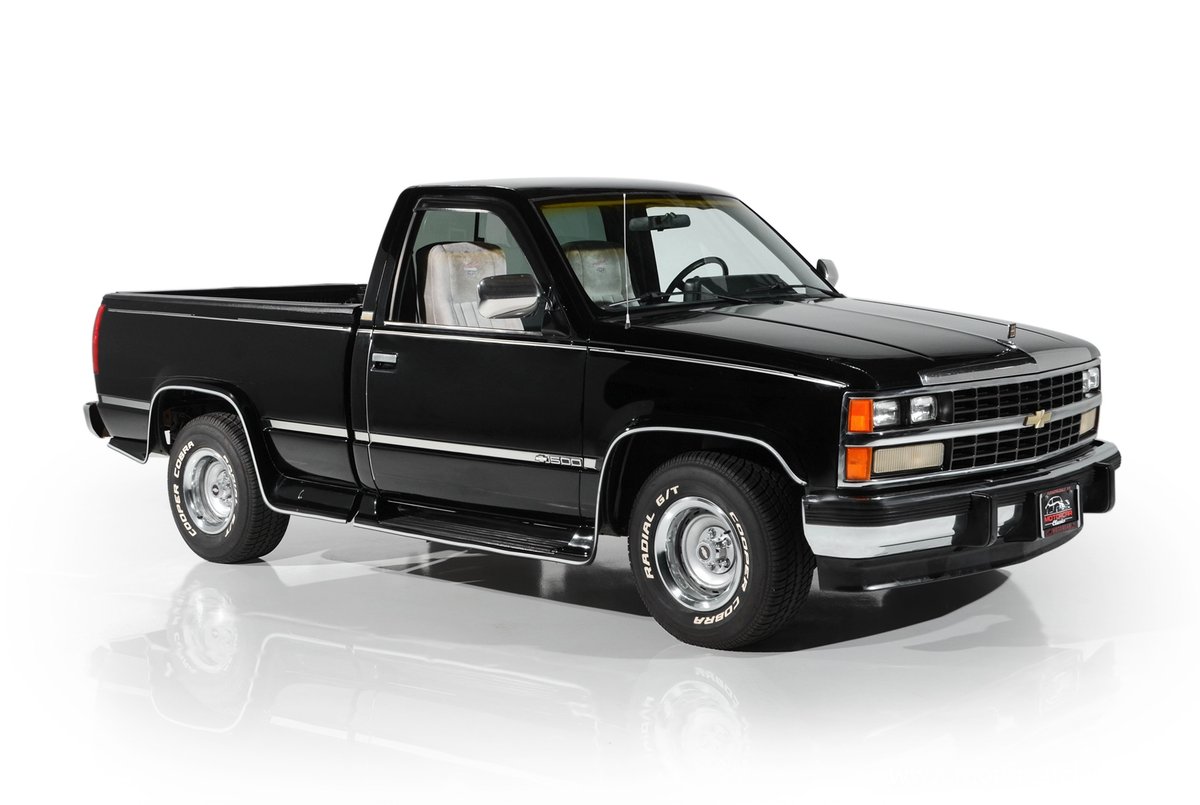
For decades, the Chevrolet C/K series wasn't just a line of trucks; it was the backbone of America. From hauling hay on the farm to conquering construction sites, these workhorses built a reputation for bulletproof durability and undeniable capability. This wasn't merely a vehicle designation; it was the foundation upon which modern pickup trucks, including the revered Silverado, would be built. Understanding The C/K Series Legacy & Birth of Silverado isn't just a trip down memory lane; it's an essential journey into how today's trucks became the versatile, powerful machines we know and rely on.
This comprehensive guide will unpack the C/K's groundbreaking journey, its evolution, the moment it passed the torch, and how its DNA continues to thrive in every Chevrolet Silverado on the road today.
At a Glance: The C/K & Silverado Story
- C/K Explained: "C" means rear-wheel drive, "K" means four-wheel drive, a system that simplified truck choices for decades.
- A Legacy Born: The C/K series began its life in 1959 with the iconic Task Force trucks, encompassing everything from light-duty C10s to heavy-duty C60s.
- Pioneering 4x4: The "K" series trucks were leaders in off-road technology, featuring robust transfer cases and advanced suspensions.
- The Torch Pass: The C/K nameplate retired in 1999, directly succeeded by the Chevrolet Silverado, inheriting its spirit and core engineering.
- Silverado's Evolution: Four distinct generations, from the aerodynamic GMT800 (1999-2006) to today's bold GMT T1 (2019-Present), each advancing technology, comfort, and capability.
- Enduring Value: C/K trucks, especially models like the C10 and K5 Blazer, are highly sought after by collectors, with some fetching over $1 million at auction.
- Reliability & Future: Silverado consistently ranks high in durability, with future models promising even more advanced safety, connectivity, and potentially hybrid/electric powertrains.
Decoding the Legend: What "C" and "K" Really Meant
Before the sleek lines of modern pickups, Chevrolet had a straightforward, functional naming system for its trucks: C/K. This simple alphanumeric code was a stroke of genius, immediately telling buyers exactly what a truck was designed for.
The "C" stood for "conventional" – Chevrolet's designation for a two-wheel-drive truck, optimized for on-road performance, hauling, and towing where extra traction wasn't a primary concern. Think of it as the workhorse designed for pavement and gravel roads, offering a smoother ride and often better fuel economy.
Then there was the "K." This letter signified "four-wheel drive." For those needing to venture off the beaten path, tackle challenging terrain, or navigate inclement weather, the "K" series was the answer. These trucks were engineered for enhanced off-road capability, providing superior traction and control. This clear distinction empowered customers to choose the right truck for their specific needs without confusion, a testament to GM's focus on utility and clarity.
This coding system wasn't just arbitrary; it was integral to GM's truck identity, reflecting a commitment to building purpose-driven vehicles. It laid the groundwork for decades of innovation, especially in the realm of 4x4 technology.
From Task Force to Trailblazer: The C/K Series Takes Root
The story of the C/K series didn't begin with a bang but a steady, purposeful evolution. Its official inception can be traced back to 1959 with the second-generation Chevrolet Task Force trucks, though many enthusiasts consider the entire "Apache" era as part of its spiritual lineage. This early generation established the fundamental principles that would guide C/K development for the next four decades: ruggedness, versatility, and the ability to handle serious work.
Early C/K models ranged dramatically in capability and size. You had the light-duty C10, a half-ton pickup that became an icon for both work and daily driving, often admired for its clean lines and robust performance. On the other end of the spectrum were the heavy-duty models like the C60, designed for commercial applications, capable of hauling significant loads with ease.
What truly set the C/K series apart, particularly its "K" designation trucks, was its pioneering spirit in 4x4 technology. These weren't just trucks with power sent to all four wheels; they featured strong transfer cases, which allowed drivers to switch between two-wheel and four-wheel drive. Coupled with advanced suspension systems for the era and powerful drivetrains, the "K" trucks offered unparalleled capability when the pavement ended. This continuous innovation cemented the C/K series' reputation as not just a tough truck, but a technologically advanced one, especially for its time.
Identifying Your C/K: A Practical Guide
Whether you're a potential buyer, a new owner, or simply an admirer, identifying a C/K truck's specific model year and characteristics can be a rewarding puzzle. The most accurate way to pinpoint a C/K's model year is by decoding its Vehicle Identification Number (VIN). Every C/K truck has a VIN, typically located on the driver's side dashboard or door jamb. A specific digit within this alphanumeric sequence, often the 10th digit, indicates the production year. Online VIN decoders are readily available and provide a wealth of information beyond just the year, including the plant it was built in, engine type, and more.
Beyond the VIN, a keen eye for visual cues can tell you a lot. Each generation of C/K trucks had distinct body styles, trim levels, and most notably, grille designs.
- 1960-1966 (Second Generation C/K): Known for its "Eyebrow" or "Fleetside" body, distinctive dual headlights, and specific grille patterns that varied year to year.
- 1967-1972 (Third Generation C/K): Often called the "Action Line" or "Glamour Truck," these are highly sought after. Look for the "egg crate" grille, flush-mounted side markers, and body lines that became increasingly squared off through the years.
- 1973-1987 (Fourth Generation C/K): The "Square Body" generation is perhaps the most recognizable. Its boxy, utilitarian design makes it easy to spot. Grille designs changed significantly, from horizontal bars to intricate egg crates and stacked headlights, providing key year indicators. Fender flares, mirror styles, and interior layouts also offer clues.
- 1988-1998 (Fifth Generation C/K / GMT400): These trucks introduced more aerodynamic styling. Look for flush headlights, sleeker body lines, and interiors that began to prioritize driver comfort. This generation is often referred to by its platform code, GMT400, and represents the final evolution of the C/K nameplate before the Silverado era.
Understanding these subtle yet significant design shifts helps enthusiasts appreciate the evolution of Chevrolet's iconic truck line.
The Dawn of a New Era: From C/K to Silverado
The year 1999 marked a pivotal moment in Chevrolet's truck history. After four decades of service, the venerable C/K nameplate was officially retired. It wasn't a discontinuation, however, but rather a strategic rebranding and modernization. Chevrolet made the bold decision to introduce a new flagship full-size pickup truck line, giving it a name that was already familiar to many: Silverado.
The Silverado name wasn't entirely new; it had previously existed as a premium trim level within the C/K series, signifying the highest echelons of comfort, features, and style. By elevating "Silverado" to the primary model designation, Chevrolet sought to convey a fresh identity that still carried the weight of its legendary predecessor's reputation.
This transition was seamless in many ways. The Silverado's lineage traces directly back to the C/K series, inheriting its very spirit of durability, performance, and versatility. The engineering lessons, the commitment to robust powertrains, and the understanding of what truck buyers truly needed were all carried forward. It was less of a revolution and more of an evolution – a modern interpretation of a classic American icon, built to tackle the demands of the 21st century while standing firmly on the shoulders of its C/K giants.
Silverado's Ascent: A Modern Pickup Icon Takes Flight
With the torch passed, the Silverado didn't just carry on the legacy; it amplified it, adapting to evolving consumer expectations and technological advancements. What followed were four distinct generations, each building on the last, pushing the boundaries of what a full-size pickup could be. To truly appreciate the Silverado's journey, we need to Explore all Silverado generations in detail, understanding how each iteration shaped its modern identity.
First Generation (1999-2006): The GMT800 Era
The inaugural Silverado, built on the GMT800 platform, was a significant departure from the "Square Body" C/K design of old. It featured a more modern, aerodynamic design, signaling a new era of automotive styling for trucks. Inside, drivers found a surprisingly spacious cabin, designed for comfort during long hauls or daily commutes. Under the hood, the powerful and efficient Vortec V8 engine became a hallmark, offering robust performance that appealed to both work truck operators and personal use buyers. This generation quickly established the Silverado as a formidable contender in the highly competitive pickup market.
Second Generation (2007-2013): The GMT900 Refinement
The GMT900 platform ushered in the second generation of the Silverado, bringing with it a more refined exterior aesthetic. While still unmistakably a Silverado, its lines were smoother, its stance more aggressive. The interior received a substantial update, boasting improved materials and a greater focus on ergonomics and quietness, making it a more comfortable place to spend time. This generation also saw the introduction of the acclaimed Duramax diesel engine option, providing unparalleled torque and towing capability, especially popular in heavy-duty variants. Safety features also began to become more prevalent, reflecting growing consumer demand.
Third Generation (2014-2018): The GMTK Technological Leap
With the GMTK platform, the third-generation Silverado marked a significant leap in both technology and safety. Chevrolet continued to refine the truck's aerodynamics and exterior styling, giving it a chiseled, contemporary look. Inside, the focus on sophistication intensified, with a fully redesigned, refined interior that included the highly anticipated touchscreen infotainment system. This generation was packed with advanced driver-assist features and connectivity options, solidifying its position as a modern, high-tech vehicle. Fuel efficiency was also a key focus, with new engine technologies and lightweight materials contributing to improved performance.
Fourth Generation (2019-Present): The GMT T1 Era of Choice
The current, fourth-generation Silverado, built on the GMT T1 platform, is perhaps the boldest yet. It features an aggressive, commanding design that ensures it stands out on any road or job site. The interior is premium, offering a blend of ruggedness and luxury, with an emphasis on advanced technology and connectivity. Crucially, this generation introduced a wider array of powertrain options, catering to an even broader customer base. From the surprisingly capable and efficient 2.7L turbocharged four-cylinder engine to the powerhouse 6.2L V8 and the ever-reliable Duramax diesel, there's a Silverado for every need and preference. This generation continues to push boundaries in terms of capability, comfort, and customization.
Why They Endure: Reliability and the Road Ahead
One of the most compelling reasons behind the enduring popularity of both the C/K series and its successor, the Silverado, is their reputation for unyielding reliability. Chevrolet trucks consistently rank high in reliability surveys, a testament to their robust engineering and durable components. This isn't just anecdotal; it's a measurable quality that translates into lower ownership costs, fewer breakdowns, and a strong resale value. For truck owners, reliability isn't a luxury; it's a necessity, and both the C/K and Silverado have delivered it in spades.
Looking to the horizon, the future of the Silverado promises even more innovation. Expect to see the continuous integration of advanced safety features, such as enhanced collision avoidance systems, adaptive cruise control, and improved visibility aids. Enhanced connectivity will undoubtedly be a focus, with more sophisticated infotainment systems, over-the-air updates, and seamless integration with smart devices. Perhaps most significantly, future Silverado generations are expected to embrace the shift towards hybrid or electric powertrains. Chevrolet has already unveiled the all-electric Silverado EV, signaling a bold new direction while aiming to maintain the core capabilities and workhorse mentality that have defined its trucks for generations. The legacy of versatility and robust performance is set to continue, even as the power source evolves.
The Collector's Dream: C/K's Enduring Market Value
Beyond their utility, C/K series trucks hold a significant, often surprising, place in car history and the collector's market. These aren't just old trucks; they are artifacts of American industry, cherished for their timeless design, mechanical simplicity, and the nostalgic connection they evoke.
Certain C/K models have ascended to iconic status, becoming highly sought-after collector's items:
- The C10: Especially models from the 1960s and early 1970s, the C10 half-ton pickup is a perennial favorite. Its clean lines, wide range of customization options, and relative abundance make it a popular choice for restorers and customizers alike.
- The K10: The four-wheel-drive counterpart of the C10, the K10 offers the same classic aesthetic with added off-road prowess, appealing to those who appreciate both form and function.
- Special Editions: Models like the Cheyenne trim, which offered enhanced comfort and luxury features for its time, are particularly prized.
- SUV Variants: The C/K chassis also spawned legendary SUVs that are now major collector's items, including the C/K Blazer (especially the full-size K5 Blazer) and the C/K Suburban. These iconic vehicles are testaments to the C/K platform's versatility.
- Performance Variants: Later C/K models even saw performance editions, such as the C/K-based 454 SS, which brought muscle car power to a pickup, making it a unique collector's piece.
It's not uncommon for early C/K models, particularly those that are rare, meticulously restored, or from highly desirable years, to command astonishing prices at auctions. Some pristine examples have been known to sell for over $1 million, firmly establishing them as smart investments for those with the foresight and passion.
Restoring a C/K truck is a labor of love that requires skilled hands and deep knowledge. The goal is often to maintain its original charm – the classic aesthetics, the robust mechanical feel – while allowing for judicious modern touches that enhance drivability, safety, or comfort without compromising authenticity. From frame-off restorations to tasteful restomods, the C/K platform offers a canvas for endless creativity, further cementing its place in the hearts of automotive enthusiasts worldwide.
Choosing Your Legend: Modern Silverado vs. Classic C/K
Deciding between a gleaming new Silverado and a timeless C/K classic isn't just a matter of budget; it’s about weighing your priorities, lifestyle, and passion. Each offers a distinct experience and set of benefits.
Why Choose a Modern Silverado?
If your priority is cutting-edge technology, unparalleled comfort, and robust capability wrapped in a contemporary package, a modern Silverado is your go-to.
- Advanced Safety Features: Modern Silverados are equipped with active safety systems like automatic emergency braking, lane-keeping assist, and blind-spot monitoring, significantly reducing accident risk.
- Refined Comfort & Technology: Expect plush interiors, advanced infotainment systems (with Apple CarPlay/Android Auto), climate control, heated/ventilated seats, and a much quieter, smoother ride.
- Efficiency & Power: Modern engines, including the turbocharged 4-cylinder, V8s with dynamic fuel management, and Duramax diesels, offer impressive power-to-efficiency ratios.
- Warranty & Reliability: New trucks come with factory warranties, and contemporary manufacturing ensures high levels of initial quality and predictable maintenance.
- Towing & Hauling Capability: While older trucks were strong, modern Silverados benefit from decades of engineering advancements in chassis design, braking, and towing technology, often rated for much higher capacities with greater stability.
Why Embrace a Classic C/K?
For those who crave nostalgia, a hands-on driving experience, and a connection to automotive history, a classic C/K offers an emotional reward that a new truck simply cannot.
- Timeless Aesthetics: The iconic lines of a C10, the rugged appeal of a Square Body, or the distinctive look of a K5 Blazer are unmatched and draw admiring glances wherever they go.
- Mechanical Simplicity: Older trucks are generally easier to work on. Fewer complex electronics mean that many repairs can be tackled by a dedicated enthusiast with basic tools and a service manual.
- Investment Potential: As mentioned, certain C/K models are appreciating assets, making them potentially rewarding investments beyond their utility.
- Customization Canvas: The aftermarket support for C/K trucks is enormous, offering endless possibilities for personalization, from engine swaps to suspension upgrades and unique interior treatments.
- Driving Experience: A classic C/K offers a raw, visceral driving experience that connects you directly to the road. It's less about isolation and more about engagement.
Making Your Decision: Practical Considerations
- Daily Driver vs. Weekend Cruiser: If you need a reliable daily driver for commuting, errands, and heavy work, a new Silverado's modern amenities and safety are hard to beat. A C/K is more suited as a weekend toy, project vehicle, or fair-weather cruiser.
- Budget: While a new Silverado can cost upwards of $40,000-$70,000+, a project C/K can be acquired for a few thousand. However, a fully restored C/K can easily exceed the cost of a new Silverado. Be realistic about restoration costs if you go the classic route.
- Maintenance & Parts: Modern Silverado parts are readily available at dealerships. For C/K, while many parts are reproduced, finding original or specific trim pieces can be a treasure hunt. Maintenance will likely require a mechanic familiar with older vehicles or your own mechanical aptitude.
Ultimately, the choice comes down to whether you prioritize the creature comforts and advanced capabilities of today or the nostalgic charm and hands-on engagement of yesteryear. Both pathways lead to owning a piece of Chevrolet's legendary truck heritage.
Building Your Own Legacy: The Enduring Impact
The journey from the utilitarian C/K series to the sophisticated Silverado is more than just a timeline of model years and engine upgrades. It's a narrative of continuous innovation, adapting to the changing demands of American life, and an unwavering commitment to building trucks that work hard and stand the test of time.
Whether you're cruising in a meticulously restored C10, tackling tough jobs in a brand-new Silverado, or simply admiring their lines from afar, you're engaging with a legacy that fundamentally shaped what a pickup truck is and what it can do. The clear, functional "C" and "K" designations, born decades ago, didn't just name trucks; they defined their purpose, setting a standard for capability that resonates even in the advanced, connected, and increasingly electrified trucks of tomorrow.
So, next time you see a Chevrolet truck, remember the deep roots it shares with its C/K predecessors. It's a lineage built on grit, innovation, and an enduring promise to deliver. What started as a simple code became a symbol of American resilience, evolving but never losing sight of its core mission: to serve, to work, and to forge ahead.